


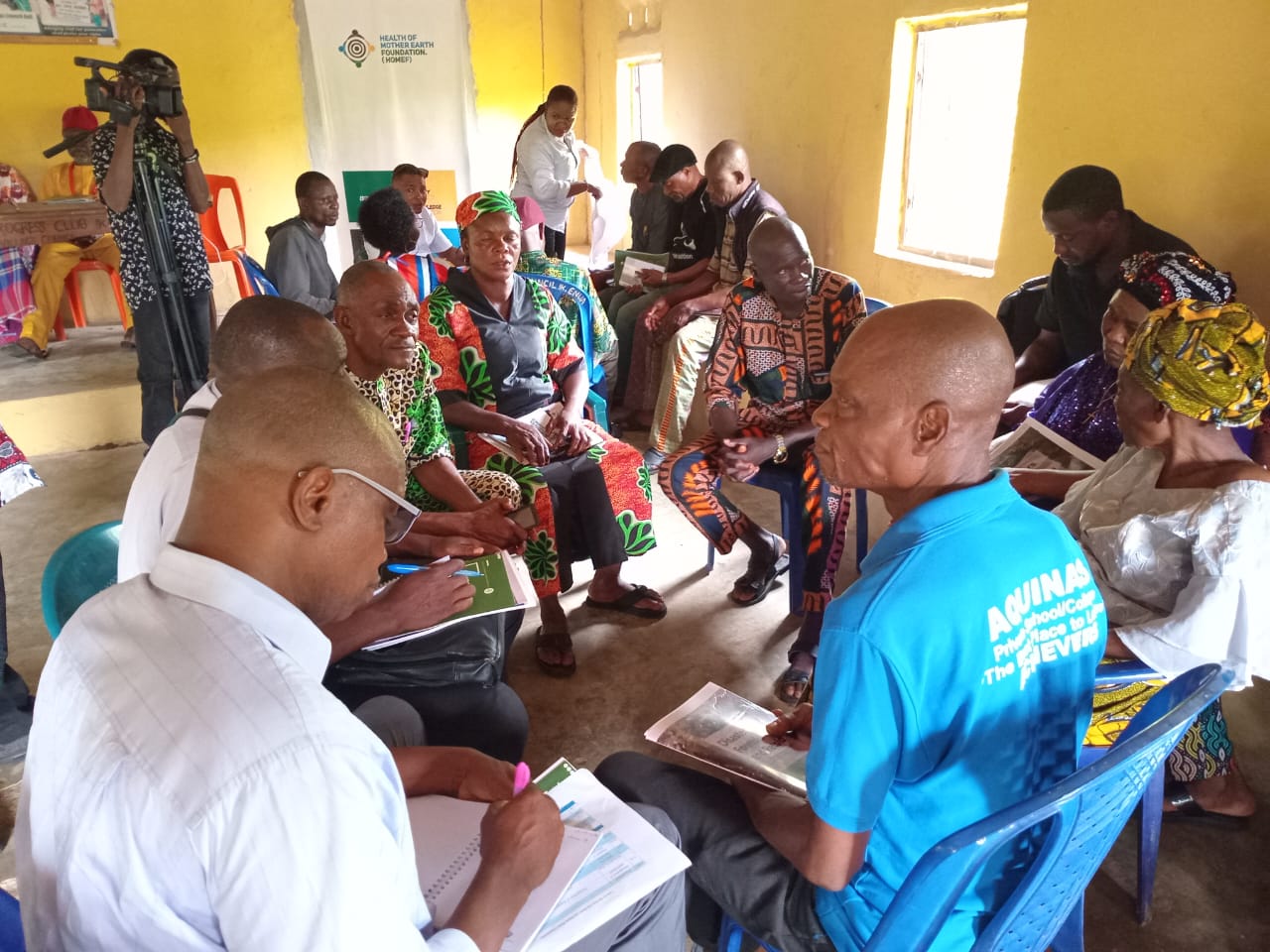
Research by the Health of Mother Earth Foundation (HOMEF) has indicated that oil wells abandoned for more than 50 years in Ikono and Ibiono Ibom Local Government Areas of Akwa Ibom State may be contributing to environmental pollution, with community members reporting periodic oil discharges from the assets to water bodies and farmlands, deteriorating vegetation, extinction of plants and animals species and emerging health concerns.
According to residents, visible crude oil has been observed flowing into farmlands, swamps, and water bodies, raising concerns about the potential impact on human health, livelihoods and the wider ecosystem.
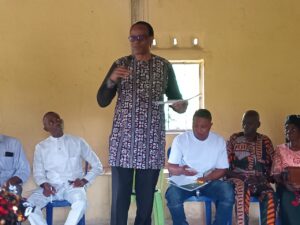
The concerns were raised during a capacity-sharing session organised by HOMEF with communities in Ikono and Ibiono Ibom on Wednesday, September 9, 2026.
According to HOMEF Director, Nnimmo Bassey, the essence of the gathering was to enable the communities to develop an action plan that would be presented to relevant government agencies for intervention aimed at protecting and restoring the environment.
“The outcome of this meeting will enable the drafting of a community action plan which will capture the views of the people concerning their first-hand experiences with issues of environmental pollution within their communities.”
Bassey also noted that capped oil wells and wellheads that have existed for more than five decades do not necessarily mean that there are no periodic oil discharges or gas emissions requiring technical assessment, decommissioning, remediation and environmental restoration.
Communities’ Perspectives
Members of Ikono and Ibiono Ibom communities shared testimonies of how their environment had been ravaged by pollution from the abandoned oil assets, affecting homes, farmlands, swamps, crops, plants and animals.
Mr. Trust Udoh of Uyo Afaha Nkan Community in Ikono LGA said there was an oil spill around his farmland at Idim Etok, a swampy site where an oil well has reportedly been abandoned since 1958.
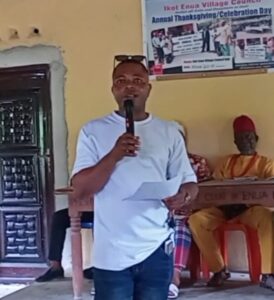
He said a report concerning the site was made in 2002 involving Shell Petroleum Development Company (SPDC). Udoh added that the report followed several other letters as far back as 1994 from the community demanding a clean-up and appropriate compensation.
“Why I came to this meeting was to still make my complaint known because my community has been suffering from oil spills for over 50 years. We have made several reports about it, yet there is no response. We have written to Shell and NUPRC recently, yet no response.”
He lamented the health hazards that community members are allegedly exposed to, particularly those living close to areas where pipelines were laid.
He said the effects of the emissions are felt not only on buildings but also on the lives and livelihoods of residents.
“Our roofing sheets do not last for up to five years. Our farmlands have reduced yields, which has affected the economic power of families, thereby increasing poverty in the land.”

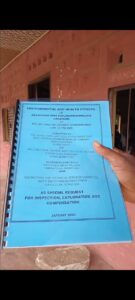
The Crest reporter sighted a document dated 2002 and addressed to Shell, which highlights the prolonged environmental concerns and the community’s allegation that the company had failed to take responsibility for cleaning up and remediating the affected environment.
The document is titled: “Environmental and Health Effects of Abandoned SPDC Exploration/Drilling Locations at Ikot Udo Enang and Catchment Sedimentary Basin (OML 12, 1958–2002).”
It was submitted to the Head, Lands and Legal Department, East, Shell Petroleum Development Company, Port Harcourt, Rivers State, by the Executive Council of Ikot Udo Enang Village, Ediene Clan, Ikono LGA, Akwa Ibom State, in conjunction with Uyo Afaha Nkan Village, Ediene Clan, Ikono LGA, and the Engineering and Technical Services Committee, Ndiya Youth Progressive Union, Ndiya Clan, Ikono LGA.
Also speaking, Bassey Henry Bassey of Uyo Afaha Nkan said roofing sheets in the area do not last up to five years, while palm trees had stopped producing fruits as they once did.
He said crops such as cocoyam, cassava and yam often withered in the ground before harvest. While okro and other vegetables can not have good yield in the area.
“Millipedes, snails and fishes have gone extinct because of the effect of this pollution on our environment,” Bassey said.
The residents also lamented alleged illegal bunkering activities around the abandoned assets, saying the activities have created fear within the communities.
According to them, perpetrators of the activities often move around with armed men who shoot sporadically into the air to intimidate residents.
In Ntan Mbat/Adarabom, Ibiono Ibom LGA, Mr. Friday John Akpan, who led the delegation, said oil from one of the assets in the area was currently spilling into a nearby body of water.
He said the oil was contaminating the water and making it unsafe for aquatic lives and other aquatic foods consumed by residents.
HOMEF Field Report
Presenting the field report, Mr. Umo Isua-Ikoh said the environmental concerns associated with the abandoned assets were not limited to occasional visible oil releases.
He said the concerns included reported oil contamination, possible gas emissions, deteriorating infrastructure, potential exposure of communities and ecosystems to hydrocarbons, as well as the possibility that poorly monitored assets could be interfered with or used for illegal crude oil activities.
The report identified varying pollution-related concerns in the communities visited, including Ikot Enua, Ikono; Ediene Atai; Ikot Idaha; Uyo Afaha Nkan; Ntan Mbat/Adarabom, Ibiono Ibom; and Ikot Uba/Edem Urua.
Ikot Enua, Ikono
The report identified a standing wellhead popularly referred to as a “Christmas Tree”, which was discovered and capped in 1958, with oil reportedly present around the wellhead.
According to the report, the source and composition of the oil could not be ascertained during the visit. It noted that the presence of the oil could potentially be linked to leakage, deliberate interference, natural seepage or another source requiring technical investigation.
Residents said they had been told that the well was capped because the oil was not commercially viable at the time.
The report, therefore, noted that any environmental intervention should be accompanied by clear information on the actual status, integrity, ownership and environmental risks associated with the assets.
Ediene Atai, Ikono
A poorly monitored abandoned oil well in the community was recently visited, with alleged illegal bunkering activity observed around the site. According to the report, this highlights the potential opportunities for crude oil theft and other illegal petroleum activities.
Sources said the asset was intended to obtain crude oil from the abandoned Ikot Enua oil well.
Ikot Idaha, Ikono
No visible oil heads were identified in the community. However, residents identified two pipelines reportedly connected to the Ikot Enua oil asset.
Uyo Afaha Nkan, Ikono
Residents reported repeatedly observing oil streams, particularly during the rainy season.
They recalled an oil head in the area that has since become a borrow pit following construction activities associated with the Ikot-Ekpene-Calabar-Itu Highway.
The alteration of the landscape has made it difficult to locate the former wellhead.
The report noted that this underscores the need for proper documentation of the historical location and status of oil wells, even where subsequent land-use changes have obscured or removed visible evidence.
Ntan Mbat/Adarabom, Ibiono Ibom
Residents identified two capped oil wells with numbers, although the number on one of the assets was blurred.
GBV: Akwa Ibom stakeholders demand better data, more funding
The report stated that former officials of the Department of Petroleum Resources and the current regulatory structures had reportedly visited the area to inspect the facilities and ensure that they were not tampered with.
Residents said they were encouraged to protect the oil wells because the assets would eventually be utilised.
According to the report, this creates a perception of potential future economic use of the assets rather than a focus on the environmental liabilities they may currently pose to the people and their surroundings.
Ikot Uba/Edem Urua
The community has an aged pipeline located in a swampy area and covered by vegetation. The report stated that residents had observed periodic oil spills in the swamp.
HOMEF’s Position
The Director of HOMEF, Nnimmo Bassey, said it was high time oil companies operating in the communities respect court orders. He added that if oil companies had no regard for the legal system, they could not claim to have regard for the political system.
Bassey also advocated the training of youths in other profitable vocations and the acquisition of sustainable skills rather than depending solely on employment opportunities in the oil industry.
He said the destruction of farmlands and water bodies, as well as the reported extinction of animal and plant species, should be a matter of grave concern requiring urgent environmental remediation and restoration.