


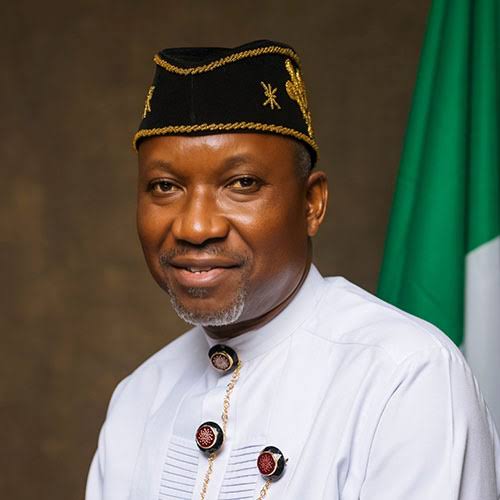
The Minister of State Petroleum Resources (Gas), Rt. Hon. Ekperikpe Ekpo, has called for a coordinated and integrated strategy to reposition Nigeria’s oil and gas sector for efficiency, sustainability and global competitiveness.
Ekpo made the call on Thursday in Abuja, while speaking as Special Guest of Honour at the 26th edition of the Oloibiri Lecture Series and Energy Forum, organised by the Society of Petroleum Engineers Nigeria Council.
While noting that Nigeria’s ambition to increase production and optimise performance across the value chain cannot be achieved through fragmented efforts, the Minister emphasised the need to align digitalisation, capital and policy frameworks for intelligent operations and asset optimisation.
On digitalisation, the Minister said the future of oil and gas operations is increasingly data-driven, with technology playing a central role in improving efficiency, safety and cost management.
“The future of oil and gas operations is undeniably data-driven. From upstream exploration to midstream processing and downstream distribution, digital technologies such as artificial intelligence, predictive analytics, and automation are transforming how assets are managed and optimised. Intelligent operations reduce downtime, enhance reservoir management, improve safety, and ultimately drive cost efficiency.”
“As a government, we are committed to supporting the integration of these technologies across the value chain, ensuring that Nigeria remains competitive in an increasingly digital energy ecosystem,” Ekpo said.
The Minister assured that the current administration of President Bola Tinubu will continue to improve ease of doing business and ensure efficiency in the energy sector.
“The enactment of the Petroleum Industry Act (PIA) 2021 marked a watershed in Nigeria’s energy sector, providing a transparent, predictable, and investor-friendly legal framework. Complemented by Presidential Executive Orders and ongoing regulatory improvements, we are strengthening governance, enhancing ease of doing business, and ensuring that policies are responsive to industry realities. Our objective is to create a stable and coherent framework that supports innovation, efficiency, and long-term value creation,” he said.
Earlier, Chairman of the Society of Petroleum Engineers (SPE) Nigeria Council, Engr. Francis Nwaochei, pointed out that the forum will help examine how African nations can redesign fiscal frameworks to de-risk major projects, attract new investors and address the intersection of finance, technology and regulation, while also focusing on practical funding mechanisms such as reviewing Joint Operating Agreements, aimed at building a digitally integrated energy sector.